


What is the contamination resistance of a screw bearing?
As a supplier of screw bearings, I've witnessed firsthand the critical role these components play in various industrial applications. One of the most significant factors that can affect the performance and lifespan of a screw bearing is its contamination resistance. In this blog post, I'll delve into what contamination resistance means for screw bearings, why it's important, and how our products at [company role] are designed to withstand contaminants.
Understanding Contamination Resistance
Contamination resistance refers to a bearing's ability to prevent the ingress of foreign particles, such as dust, dirt, water, and chemicals, into its internal components. These contaminants can cause a range of problems, including increased friction, wear, corrosion, and premature failure. A bearing with high contamination resistance is better able to maintain its performance and reliability in harsh environments.
There are several factors that contribute to a screw bearing's contamination resistance. One of the most important is the design of the bearing's seals and shields. Seals are typically made of rubber or synthetic materials and are designed to prevent the entry of contaminants while retaining lubricant inside the bearing. Shields, on the other hand, are made of metal and provide a physical barrier against larger particles.
Another factor is the quality of the bearing's materials. High-quality materials, such as stainless steel or ceramic, are more resistant to corrosion and wear, which can help to improve the bearing's contamination resistance. Additionally, the manufacturing process can also affect the bearing's contamination resistance. For example, bearings that are precision-machined and have a smooth surface finish are less likely to trap contaminants.
Why Contamination Resistance is Important
The importance of contamination resistance cannot be overstated. In many industrial applications, screw bearings are exposed to harsh environments that are filled with contaminants. For example, in the mining industry, bearings are often exposed to dust, dirt, and water, which can cause significant damage if not properly protected. Similarly, in the food and beverage industry, bearings are exposed to chemicals and cleaning agents, which can corrode the bearing's components.
By using screw bearings with high contamination resistance, companies can reduce the risk of bearing failure and downtime. This can result in significant cost savings, as well as improved productivity and efficiency. Additionally, bearings with high contamination resistance can also help to extend the lifespan of the equipment, reducing the need for frequent replacements.
Our Screw Bearings and Contamination Resistance
At [company role], we understand the importance of contamination resistance in screw bearings. That's why we offer a wide range of screw bearings that are designed to withstand even the harshest environments. Our bearings are equipped with high-quality seals and shields that provide excellent protection against contaminants. Additionally, we use only the highest quality materials in our manufacturing process, ensuring that our bearings are resistant to corrosion and wear.
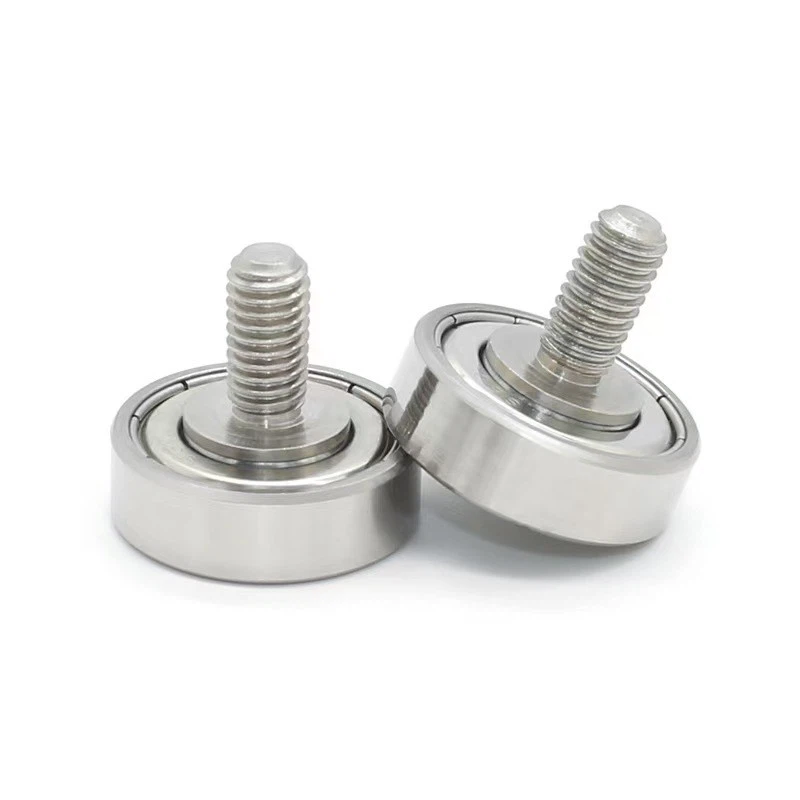

One of our most popular products is the Screw BearingsS609ZZ. This bearing is designed for use in a variety of applications, including automotive, industrial, and agricultural. It features a double shield design that provides excellent protection against dust and dirt, as well as a high-quality lubricant that helps to reduce friction and wear.
Another popular product is the Screw BearingsS696ZZ. This bearing is ideal for use in applications where space is limited, such as in small motors and appliances. It features a single shield design that provides good protection against contaminants, as well as a compact size that makes it easy to install.
We also offer the External Threaded Bearing 6002ZZ With Screw. This bearing is designed for use in applications where a threaded shaft is required, such as in conveyor systems and machinery. It features a double shield design that provides excellent protection against contaminants, as well as a high-quality screw that ensures a secure fit.
Testing and Quality Assurance
To ensure that our screw bearings meet the highest standards of contamination resistance, we conduct extensive testing and quality assurance procedures. Our bearings are tested in a variety of environments, including high dust, high humidity, and chemical exposure, to ensure that they can withstand the rigors of real-world applications. Additionally, we use advanced manufacturing techniques and quality control measures to ensure that each bearing is produced to the highest standards of quality and performance.
Conclusion
In conclusion, contamination resistance is a critical factor in the performance and lifespan of a screw bearing. By using bearings with high contamination resistance, companies can reduce the risk of bearing failure and downtime, resulting in significant cost savings and improved productivity. At [company role], we offer a wide range of screw bearings that are designed to withstand even the harshest environments. Our bearings are equipped with high-quality seals and shields, and we use only the highest quality materials in our manufacturing process. If you're in the market for screw bearings, we encourage you to contact us to learn more about our products and how they can meet your specific needs.
References
- Harris, T. A., & Kotzalas, M. N. (2007). Rolling Bearing Analysis. Wiley.
- Jones, A. R. (1997). Rolling Bearing Fatigue Life Prediction. ASME.
- SKF. (2021). SKF Bearing Handbook. SKF Group.


