


As a seasoned supplier of linear ball bearings, I often encounter inquiries about the accuracy class of these essential components. Understanding the accuracy class of a linear ball bearing is crucial for ensuring optimal performance in various applications. In this blog post, I'll delve into the concept of accuracy class, its significance, and how it relates to our products at [Your Company].
What is Accuracy Class?
Accuracy class refers to the level of precision and tolerance that a linear ball bearing meets. It is a standardized measure that indicates how closely the bearing's actual dimensions and performance characteristics match the specified values. In the industry, accuracy classes are defined by international standards such as ISO (International Organization for Standardization) and JIS (Japanese Industrial Standards).
The accuracy class of a linear ball bearing is determined by several factors, including dimensional accuracy, running accuracy, and stiffness. Dimensional accuracy refers to the deviation of the bearing's actual dimensions from the nominal values. Running accuracy, on the other hand, measures the smoothness and stability of the bearing's movement. Stiffness is the ability of the bearing to resist deformation under load.
Importance of Accuracy Class
The accuracy class of a linear ball bearing plays a critical role in the performance and reliability of the machinery in which it is used. In high-precision applications such as semiconductor manufacturing, medical equipment, and optical devices, even the slightest deviation in bearing accuracy can have a significant impact on the quality of the final product.
For example, in a semiconductor manufacturing process, the linear ball bearings used in the wafer handling system must have extremely high accuracy to ensure precise positioning of the wafers. Any inaccuracies in the bearing's movement can lead to misalignment of the wafers, resulting in defective chips and reduced production yields.
In addition to precision, the accuracy class also affects the bearing's service life and maintenance requirements. Bearings with higher accuracy classes generally have better wear resistance and lower friction, which can extend their service life and reduce the frequency of maintenance.
Accuracy Classes in Linear Ball Bearings
There are several accuracy classes available for linear ball bearings, each with its own set of specifications and tolerances. The most common accuracy classes are P0, P6, P5, P4, and P2, with P0 being the lowest accuracy class and P2 being the highest.
- P0 (Normal Accuracy): This is the standard accuracy class for most general-purpose applications. Bearings in this class have relatively large tolerances and are suitable for applications where high precision is not required.
- P6 (Higher Accuracy): Bearings in the P6 class have smaller tolerances than P0 bearings, making them suitable for applications that require moderate precision, such as machine tools and automation equipment.
- P5 (High Accuracy): The P5 accuracy class is commonly used in applications that demand high precision, such as semiconductor manufacturing and medical equipment. Bearings in this class have very small tolerances and excellent running accuracy.
- P4 (Ultra-High Accuracy): Bearings in the P4 class are designed for applications that require extremely high precision, such as optical devices and precision measuring instruments. These bearings have the smallest tolerances and the highest level of running accuracy.
- P2 (Super-High Accuracy): The P2 accuracy class is the highest level of accuracy available for linear ball bearings. Bearings in this class are used in applications that demand the utmost precision, such as aerospace and military equipment.
Selecting the Right Accuracy Class
Choosing the right accuracy class for your linear ball bearings depends on several factors, including the application requirements, the operating conditions, and the budget. Here are some guidelines to help you make an informed decision:
- Application Requirements: Consider the level of precision required for your application. If high precision is essential, such as in semiconductor manufacturing or medical equipment, you should choose a bearing with a higher accuracy class, such as P4 or P2.
- Operating Conditions: Take into account the operating conditions, such as the load, speed, and temperature. Bearings operating under high loads or speeds may require a higher accuracy class to ensure reliable performance.
- Budget: Higher accuracy classes generally come with a higher price tag. Therefore, you need to balance the precision requirements with the budget constraints. In some cases, a lower accuracy class may be sufficient for your application, especially if cost is a major concern.
Our Linear Ball Bearing Products
At [Your Company], we offer a wide range of linear ball bearings with different accuracy classes to meet the diverse needs of our customers. Our products are manufactured using high-quality materials and advanced manufacturing processes to ensure superior performance and reliability.
One of our popular products is the LM16UU Bearing, which is available in P0, P6, and P5 accuracy classes. This bearing is suitable for a variety of applications, including automation equipment, robotics, and linear motion systems.

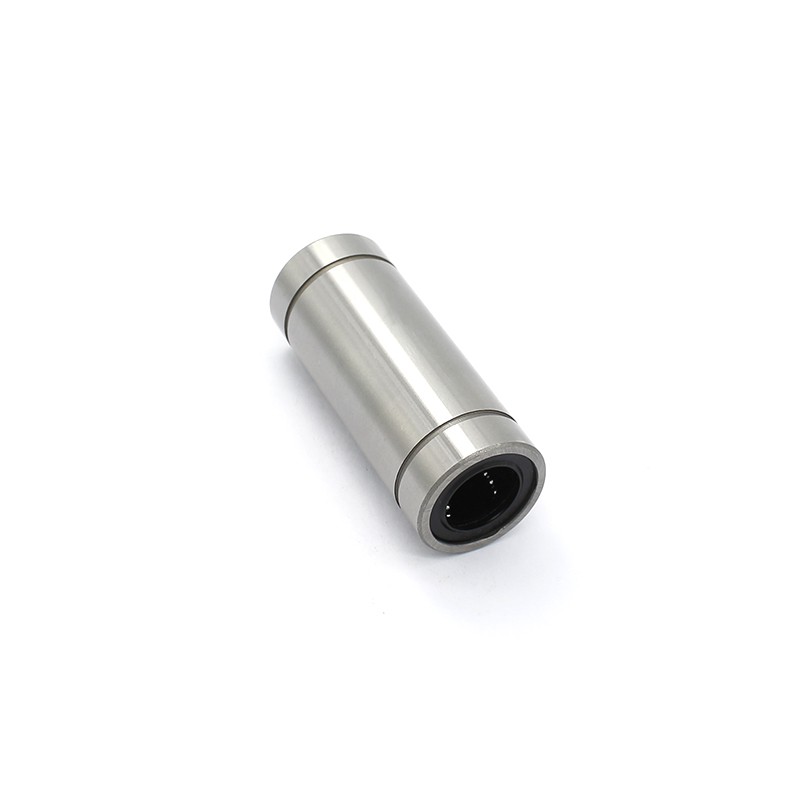
We also offer Linear Roller Bearings in different accuracy classes. These bearings are designed to provide high load capacity and smooth linear motion, making them ideal for heavy-duty applications such as machine tools and industrial automation.
Another product in our portfolio is the LM10UU Bearing, which is available in P0 and P6 accuracy classes. This bearing is commonly used in light-duty applications, such as 3D printers and small automation systems.
Contact Us for Your Linear Ball Bearing Needs
If you're looking for high-quality linear ball bearings with the right accuracy class for your application, look no further than [Your Company]. Our team of experts is dedicated to providing you with the best solutions and support.
Whether you need technical advice, product recommendations, or a customized solution, we're here to help. Contact us today to discuss your requirements and start a procurement洽谈. We look forward to working with you to meet your linear ball bearing needs.
References
- ISO 492:2017, Rolling bearings - General requirements
- JIS B 1514:2011, Rolling bearings - Tolerances


