


V groove pulleys play a crucial role in aerospace applications, where precision, reliability, and high - performance are non - negotiable requirements. As a v groove pulley supplier, I have witnessed firsthand the demanding nature of the aerospace industry and the specific material properties that these components must possess.
Lightweight
One of the most fundamental requirements for v groove pulleys in aerospace applications is lightweight. Every extra ounce in an aircraft adds to the overall weight, which in turn increases fuel consumption and reduces efficiency. Therefore, materials used for v groove pulleys should have a high strength - to - weight ratio.
Aluminum alloys are often a popular choice for this reason. They are significantly lighter than steel while still offering good mechanical properties. For example, 6061 - T6 aluminum alloy has a density of approximately 2.7 g/cm³, compared to steel's density of around 7.85 g/cm³. This weight difference can have a substantial impact on the overall weight of the aircraft system. The alloy can be easily machined into the precise v - groove shapes required for proper belt engagement, ensuring smooth operation of the pulley.
Another lightweight option is carbon fiber composites. These materials are not only extremely light but also have excellent stiffness. Carbon fiber has a density ranging from 1.5 to 2 g/cm³, making it even lighter than aluminum. The high stiffness of carbon fiber composites helps to maintain the shape of the v groove pulley under load, reducing the risk of deformation that could lead to belt slippage or other operational issues.
High Strength
In aerospace applications, v groove pulleys are subjected to significant mechanical stresses. These stresses can come from the tension in the belts, the rotational forces during operation, and the vibrations and shocks that are common in flight. Therefore, the materials used for these pulleys must have high strength.
Steel is a well - known material for its high strength. Alloy steels, such as 4140 or 4340, offer excellent tensile and yield strengths. For instance, 4140 steel can have a tensile strength of up to 120,000 psi (pounds per square inch) depending on the heat treatment. This high strength allows the v groove pulley to withstand heavy loads without failing. However, as mentioned earlier, the weight of steel can be a drawback in aerospace applications, so it is often used in combination with other lightweight materials or in applications where weight is less of a concern.
Titanium alloys are also highly regarded for their strength - to - weight ratio. Titanium has a density of about 4.5 g/cm³, which is lighter than steel but heavier than aluminum. Titanium alloys, like Ti - 6Al - 4V, have a tensile strength of around 130,000 psi. Their high strength and good corrosion resistance make them suitable for v groove pulleys in aerospace environments where the components may be exposed to harsh chemicals or high - humidity conditions.
Corrosion Resistance
Aerospace environments can be harsh, with exposure to moisture, saltwater (especially in naval aviation), and various chemicals. Corrosion can weaken the v groove pulley over time, leading to premature failure and potentially dangerous situations. Therefore, materials with good corrosion resistance are essential.
Stainless steel is a common choice for its corrosion - resistant properties. Grades such as 304 and 316 stainless steel contain chromium, which forms a passive oxide layer on the surface of the material, protecting it from corrosion. 316 stainless steel, in particular, has a higher molybdenum content, which gives it enhanced resistance to pitting and crevice corrosion, making it suitable for use in marine - related aerospace applications.
As mentioned before, titanium alloys also have excellent corrosion resistance. The natural oxide layer that forms on the surface of titanium provides a high level of protection against corrosion, even in aggressive environments. This makes titanium v groove pulleys a reliable choice for long - term use in aerospace applications.
High Temperature Resistance
In some aerospace applications, v groove pulleys may be exposed to high temperatures. For example, in the vicinity of engines or in high - speed flight where air friction can generate significant heat. Materials used for these pulleys must be able to maintain their mechanical properties at elevated temperatures.
Nickel - based superalloys are well - suited for high - temperature applications. Alloys like Inconel 718 can maintain their strength and other properties at temperatures up to 700°C (1292°F). These superalloys have a complex microstructure that provides excellent creep resistance, which is the tendency of a material to deform slowly under a constant load at high temperatures. This ensures that the v groove pulley will not lose its shape or functionality even under extreme heat.
Ceramic materials are also being explored for high - temperature aerospace applications. Ceramics have extremely high melting points and can withstand very high temperatures. For example, silicon nitride ceramics can operate at temperatures up to 1400°C (2552°F). However, ceramics are brittle, and their use in v groove pulleys requires careful design to prevent cracking and failure.
Low Friction
Friction is an important consideration in v groove pulleys. High friction can lead to increased wear on the belts and the pulley itself, as well as energy losses in the form of heat. Therefore, materials with low friction coefficients are preferred.
Polymers such as PTFE (Polytetrafluoroethylene) have very low friction coefficients. PTFE is known for its slippery surface, which reduces the friction between the belt and the v groove pulley. This not only extends the life of the belt but also improves the overall efficiency of the system. However, polymers may have limitations in terms of strength and temperature resistance, so they are often used in combination with other materials or in applications where the loads and temperatures are relatively low.
Some surface treatments can also be applied to reduce friction. For example, a hard anodizing treatment on aluminum v groove pulleys can create a smooth, low - friction surface. This treatment also improves the wear resistance of the pulley, further enhancing its performance in aerospace applications.
Compatibility with Belts
The v groove pulley must be compatible with the belts that it is paired with. Different belts are made from various materials, such as rubber, synthetic polymers, or reinforced fabrics. The material of the pulley should not cause excessive wear on the belt or react chemically with it.
For example, when using rubber belts, the pulley material should not have sharp edges or rough surfaces that could cut or abrade the rubber. If the pulley is made of a metal, it may need to have a smooth finish or a coating to prevent damage to the rubber. On the other hand, if the belt is made of a synthetic polymer, the pulley material should be chosen to ensure good adhesion and proper belt engagement.
Conclusion
As a v groove pulley supplier, I understand the importance of providing products that meet the stringent requirements of the aerospace industry. The material properties of lightweight, high strength, corrosion resistance, high temperature resistance, low friction, and compatibility with belts are all crucial for the successful operation of v groove pulleys in aerospace applications.
We offer a wide range of v groove pulleys made from different materials to suit various aerospace needs. For example, our 606ZZ Bearing Pulley is designed with high - quality materials to ensure smooth operation and long - term reliability. Our Sliding Door V Groove Rubber Pulley is an excellent choice for applications where rubber belt compatibility is a key factor.

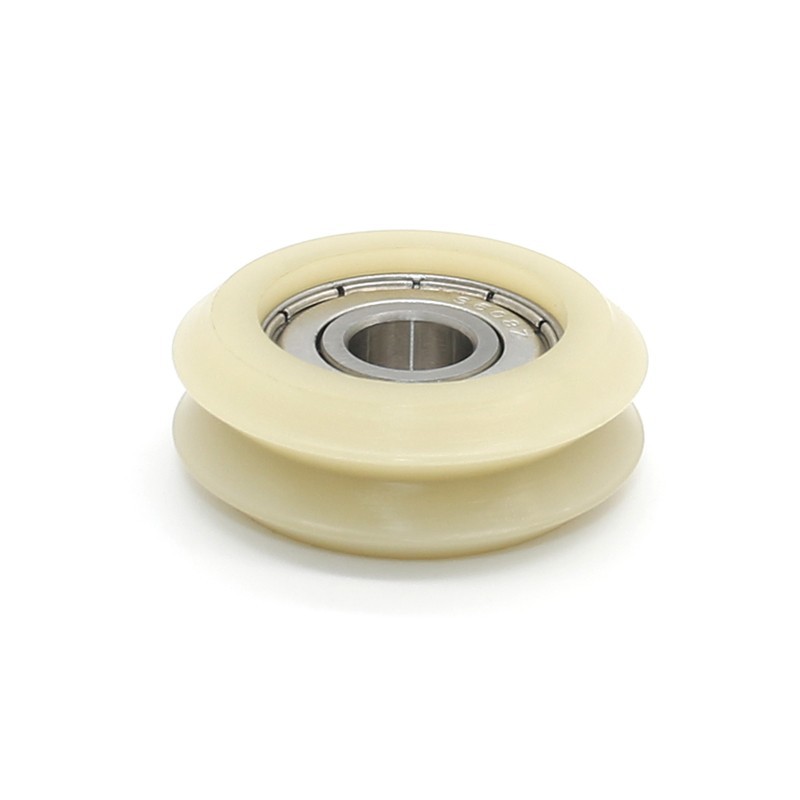
If you are in the aerospace industry and are looking for high - performance v groove pulleys, I encourage you to contact us for procurement and further discussions. We are committed to providing the best solutions for your specific requirements.
References
- ASM Handbook Volume 2: Properties and Selection: Nonferrous Alloys and Special - Purpose Materials
- Metals Handbook Desk Edition, Third Edition
- Composite Materials Handbook, MIL - HDBK - 17


