


When it comes to cam roller bearings, understanding their dimensions is crucial for both manufacturers and end - users. As a leading cam roller bearings supplier, I've witnessed firsthand the importance of getting these dimensions right for optimal performance in various applications.
Basic Dimensions of Cam Roller Bearings
The dimensions of cam roller bearings typically include the bore diameter, outer diameter, width, and roller diameter. These fundamental measurements play a significant role in determining the bearing's fit, load - carrying capacity, and rotational speed capabilities.
Bore Diameter
The bore diameter is the internal diameter of the bearing, which is designed to fit onto a shaft. It is a critical dimension as it must match the shaft diameter precisely. A bore that is too large can result in the bearing slipping on the shaft, leading to premature wear and potential failure. On the other hand, a bore that is too small may require excessive force to install, which can cause damage to the bearing or the shaft. For example, in a high - speed automation system, a precise bore - shaft fit is essential to maintain the accuracy of the cam - follower mechanism.
Outer Diameter
The outer diameter of the cam roller bearing is equally important. It determines how the bearing interacts with the cam or track surface. A larger outer diameter can distribute the load over a greater area, reducing the contact stress and increasing the bearing's service life. However, it also requires more space in the application. In contrast, a smaller outer diameter may be suitable for applications with limited space but may have a lower load - carrying capacity. For instance, in a compact robotic arm, a cam roller bearing with a smaller outer diameter can be used to save space while still providing the necessary motion control.
Width
The width of the bearing affects its load - carrying capacity and stability. A wider bearing can support higher radial and axial loads as it has more surface area in contact with the shaft and the cam. In applications where heavy loads are present, such as in industrial presses, wider cam roller bearings are often preferred. However, a wider bearing also adds more weight and may require more space.
Roller Diameter
The roller diameter influences the rolling resistance and the ability of the bearing to handle misalignment. Larger roller diameters generally result in lower rolling resistance, which is beneficial for high - speed applications. They can also better accommodate slight misalignments between the shaft and the cam. Smaller roller diameters, on the other hand, may be used in applications where space is limited or where a more precise motion is required.
Specialized Dimensions and Their Significance
In addition to the basic dimensions, there are other specialized dimensions that are important for certain types of cam roller bearings.
Flange Dimensions
Many cam roller bearings have flanges on one or both sides. The flange diameter, thickness, and width are important dimensions. The flange helps to guide the bearing along the cam or track and prevents it from shifting axially. A well - designed flange can improve the bearing's stability and reduce the risk of derailment. For example, in a conveyor system, the flanges on the cam roller bearings ensure that the rollers stay on the track, maintaining the smooth operation of the conveyor.
Crown Dimensions
Some cam roller bearings have crowned rollers. The crown height and radius are important dimensions. Crowned rollers can help to reduce edge loading, which occurs when the load is concentrated at the edges of the roller. This is especially important in applications where misalignment is likely, such as in some automotive engine components. By reducing edge loading, the crowned rollers can extend the bearing's service life and improve its performance.
Impact of Dimensions on Different Applications
The dimensions of cam roller bearings have a direct impact on their performance in different applications.
Automotive Applications
In the automotive industry, cam roller bearings are used in various components such as engine valve trains and transmission systems. In engine valve trains, the dimensions of the cam roller bearings must be carefully selected to ensure precise valve timing and smooth operation. A bearing with the wrong dimensions can cause valve - train noise, reduced engine performance, and even engine damage. For example, if the outer diameter of the cam roller bearing is too large, it may interfere with other engine components, while a bore diameter that is too small can cause excessive friction and wear on the valve - train shaft.
Industrial Automation
In industrial automation, cam roller bearings are used in robots, conveyors, and other automated machinery. The dimensions of the bearings must be chosen to fit the specific requirements of the application. For example, in a robotic arm, the bearings need to be compact and lightweight to ensure high - speed and precise movement. The width and outer diameter of the bearings are carefully selected to provide the necessary load - carrying capacity while minimizing the weight and size of the arm.
Material - Specific Dimensions
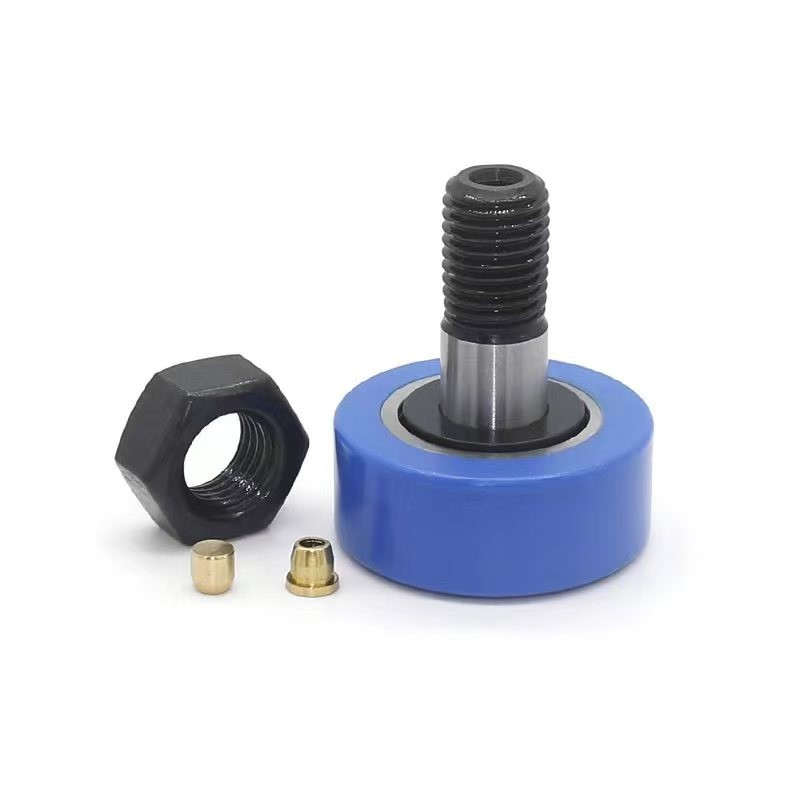
The material of the cam roller bearing also affects its dimensions. For example, Polyurethane Cam Follower and Plastic Cam Followers may have different dimensional requirements compared to traditional steel bearings. Polyurethane and plastic materials are often used in applications where noise reduction, corrosion resistance, or low - friction operation is required. These materials may have different coefficients of thermal expansion, which means that the dimensions need to be adjusted to account for temperature changes.
Importance of Precise Dimensions in Manufacturing
As a cam roller bearings supplier, we understand the importance of precise dimensions in the manufacturing process. We use advanced manufacturing techniques and quality control measures to ensure that each bearing meets the specified dimensions.
Manufacturing Tolerances
Manufacturing tolerances are the allowable variations in the dimensions of the bearing. Tight tolerances are required for high - precision applications. For example, in aerospace applications, the cam roller bearings must have very tight tolerances to ensure the safety and reliability of the aircraft. We use precision machining equipment and advanced measurement tools to control the manufacturing tolerances and ensure that the bearings meet the required specifications.
Quality Control
Quality control is an essential part of the manufacturing process. We conduct thorough inspections at every stage of production to ensure that the dimensions of the cam roller bearings are within the acceptable range. This includes using coordinate measuring machines (CMMs) to measure the bore diameter, outer diameter, width, and other dimensions with high accuracy. Any bearings that do not meet the specified dimensions are rejected to ensure that only high - quality products are delivered to our customers.
Conclusion
In conclusion, the dimensions of cam roller bearings are of utmost importance. They determine the bearing's fit, load - carrying capacity, performance, and service life. Whether it's the basic dimensions such as bore diameter, outer diameter, width, and roller diameter, or the specialized dimensions like flange and crown dimensions, each measurement plays a crucial role in different applications.
As a reliable cam roller bearings supplier, we are committed to providing high - quality bearings with precise dimensions. Our products are designed to meet the diverse needs of various industries, from automotive to industrial automation. If you are in need of cam roller bearings for your application, we invite you to contact us for a detailed discussion. We can help you select the right bearings based on your specific requirements and ensure that you get the best performance and value for your investment.

References
- Harris, T. A., & Kotzalas, M. N. (2007). Rolling Bearing Analysis. Wiley.
- Schaeffler Group. (2019). Rolling Bearings: Basics, Selection, and Application.


