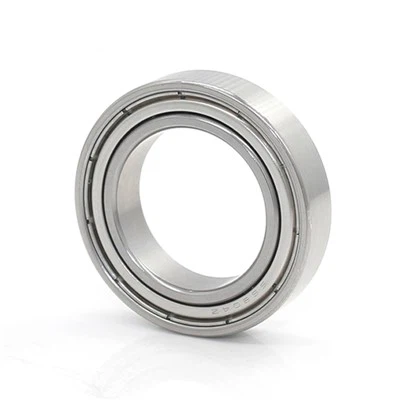
Hey there! As a supplier of spherical plain bearings, I've seen firsthand how important it is to choose the right bearings for your application. In this blog post, I'm going to share some tips on how to select self-aligning spherical plain bearings.
Understanding Self - Aligning Spherical Plain Bearings
First things first, let's talk about what self - aligning spherical plain bearings are. These bearings are designed to handle misalignment between the shaft and the housing. They have a spherical sliding surface that allows for angular movement, which is super useful in a lot of different applications.
One of the key benefits of these bearings is their ability to reduce stress on the shaft and the housing. When there's misalignment, normal bearings can wear out quickly, but self - aligning spherical plain bearings can handle it like a champ.
Factors to Consider When Selecting Self - Aligning Spherical Plain Bearings
Load Capacity
The load capacity of a bearing is crucial. You need to know how much weight the bearing will need to support. There are two types of loads: radial and axial. Radial loads act perpendicular to the shaft, while axial loads act parallel to the shaft.
For example, in a conveyor system, the bearing will mainly face radial loads as the weight of the items on the conveyor presses down on the shaft. On the other hand, in a linear actuator, there might be significant axial loads. Make sure to calculate the maximum load your application will generate and choose a bearing with a load capacity that can handle it.
Operating Speed
The speed at which the bearing will operate is another important factor. High - speed applications require bearings that can handle the centrifugal forces and heat generated. If you choose a bearing that's not suitable for high - speed operation, it can overheat and fail prematurely.
For instance, in a high - speed electric motor, the bearings need to be able to spin at a very fast rate without getting damaged. You'll need to look at the bearing's speed rating, which is usually given in revolutions per minute (RPM).
Environmental Conditions
The environment in which the bearing will be used can have a big impact on its performance. If the bearing is going to be used in a dirty or dusty environment, you'll need a bearing with good sealing to prevent contaminants from getting inside.
In a marine environment, where there's a lot of moisture and salt, you'll want a bearing made from corrosion - resistant materials, like stainless steel. Our Stainless Steel Heim Joint Rod Ends SI8 are a great option for such environments. They're made from high - quality stainless steel that can withstand the harsh conditions of the sea.
Lubrication Requirements
Proper lubrication is essential for the smooth operation of spherical plain bearings. Lubrication reduces friction and wear, and it also helps to dissipate heat.
Some bearings come pre - lubricated, while others require regular lubrication during use. You need to consider the lubrication method and the type of lubricant that's suitable for your application. For example, in a high - temperature environment, you'll need a lubricant that can withstand the heat.
Types of Self - Aligning Spherical Plain Bearings
Radial Spherical Plain Bearings
These bearings are designed to handle mainly radial loads. They have a spherical outer ring and a cylindrical inner ring. Radial spherical plain bearings are commonly used in applications like automotive suspensions, where they need to support the weight of the vehicle and handle the movement of the wheels.
Our GE50 Bearing is a great example of a radial spherical plain bearing. It's a high - quality bearing that can handle significant radial loads and has excellent self - aligning capabilities.
Rod End Bearings
Rod end bearings are used to connect two parts that need to move relative to each other. They have a spherical ball inside a housing and a threaded shank or a rod end. Rod end bearings are often used in linkages, steering systems, and control mechanisms.
Our Rod End Bearings SA8 are very popular. They're designed to provide smooth and reliable movement in a variety of applications.
Application - Specific Considerations
Industrial Machinery
In industrial machinery, such as presses, lathes, and milling machines, the bearings need to be able to handle high loads and precise movements. You'll want bearings with high load capacity and good accuracy. Make sure to choose bearings that are compatible with the machine's operating speed and environmental conditions.


Aerospace Applications
Aerospace applications have very strict requirements. The bearings need to be lightweight, yet strong enough to handle the extreme forces and vibrations. They also need to be highly reliable, as any failure can have serious consequences.
Automotive Industry
In the automotive industry, bearings are used in many different parts, such as engines, transmissions, and suspensions. For engines, you'll need bearings that can handle high - speed rotation and high temperatures. In suspensions, the bearings need to be able to handle the dynamic loads and misalignment caused by the movement of the vehicle.
Quality and Reliability
When selecting self - aligning spherical plain bearings, it's important to choose a reliable supplier. A good supplier will offer high - quality bearings that meet industry standards. You can look for suppliers that have a good reputation and positive customer reviews.
At our company, we take pride in providing top - notch spherical plain bearings. We use high - quality materials and advanced manufacturing processes to ensure the reliability and performance of our bearings.
Cost Considerations
While cost is an important factor, it shouldn't be the only thing you consider. Cheaper bearings might seem like a good deal at first, but they can end up costing you more in the long run if they fail prematurely. It's better to invest in high - quality bearings that will last and perform well.
Conclusion
Selecting the right self - aligning spherical plain bearings is a crucial decision. By considering factors like load capacity, operating speed, environmental conditions, and lubrication requirements, you can choose the bearings that are best suited for your application.
If you're in the market for spherical plain bearings, I'd love to have a chat with you. We can discuss your specific needs and find the perfect bearings for your project. Don't hesitate to reach out and start a conversation about your procurement requirements.
References
- "Bearing Handbook" by SKF
- "Mechanical Design Engineering Handbook" by Myer Kutz