


As a leading screw bearing supplier, I've witnessed firsthand the crucial role these components play in various industrial applications. Screw bearings are essential in machinery where precision, load-bearing capacity, and durability are paramount. However, one of the most significant challenges faced in using screw bearings is ensuring their long fatigue life. In this blog, I'll share some practical strategies to enhance the fatigue life of screw bearings, drawing on my years of industry experience and in-depth knowledge of these products.
Understanding Fatigue in Screw Bearings
Before delving into improvement strategies, it's essential to understand what causes fatigue in screw bearings. Fatigue in bearings is primarily due to cyclic stress. When a screw bearing is in operation, it experiences repeated loading and unloading as it rotates. Over time, these cyclic stresses can lead to the formation and propagation of cracks in the bearing material, eventually resulting in fatigue failure.
Several factors contribute to the development of fatigue in screw bearings. These include the magnitude of the applied load, the rotational speed, the lubrication conditions, and the quality of the bearing material. By understanding these factors, we can take targeted measures to improve the fatigue life of screw bearings.
Selecting the Right Bearing
The first step in improving the fatigue life of a screw bearing is to select the right one for the application. Different applications have different requirements in terms of load capacity, speed, and operating environment. For example, in high-speed applications, bearings with a high dynamic load rating are required to withstand the centrifugal forces generated during operation.
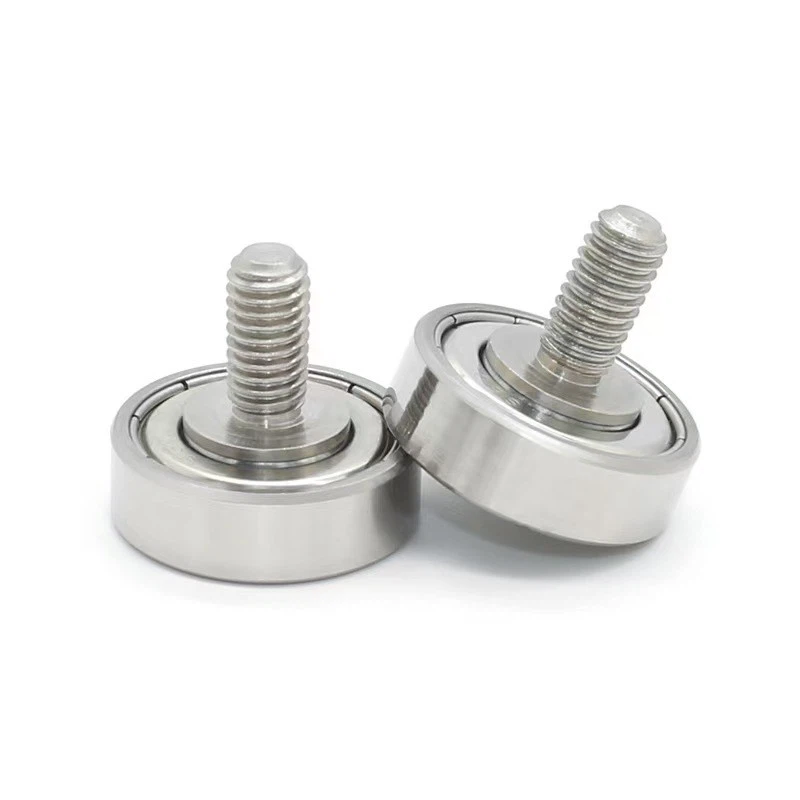
At our company, we offer a wide range of screw bearings to meet various application needs. For instance, the Screw BearingsS696ZZ is designed for applications requiring high precision and low friction. It features a sealed design, which helps to prevent the ingress of contaminants and retain lubricant, thereby extending the bearing's service life. Another popular product is the Screw BearingsS609ZZ, which is suitable for medium to high-speed applications and offers excellent load-carrying capacity.
When selecting a screw bearing, it's also important to consider the material quality. High-quality bearing steels, such as chrome steel, offer superior fatigue resistance and durability compared to lower-grade materials. Our bearings are made from premium-grade bearing steels, ensuring long-term reliability and performance.
Proper Installation and Alignment
Proper installation and alignment are critical for maximizing the fatigue life of screw bearings. Incorrect installation can lead to uneven loading, increased friction, and premature wear. When installing a screw bearing, it's important to follow the manufacturer's guidelines carefully.
One of the key steps in installation is to ensure proper shaft and housing fit. The bearing should be installed with the correct tightness, neither too loose nor too tight. A loose fit can cause the bearing to shift during operation, while a tight fit can lead to excessive stress and deformation.
Alignment is another crucial factor. Misalignment can cause uneven loading on the bearing, leading to increased wear and fatigue. To ensure proper alignment, precision measuring tools should be used during installation. Regular inspection and adjustment of the alignment during the bearing's service life are also recommended to prevent misalignment issues from developing over time.
Effective Lubrication
Lubrication plays a vital role in reducing friction and wear in screw bearings, thereby improving their fatigue life. A good lubricant forms a protective film between the rolling elements and the raceways, reducing direct metal-to-metal contact and preventing the formation of wear particles.
When selecting a lubricant for screw bearings, several factors need to be considered, including the operating temperature, speed, and load. For high-temperature applications, synthetic lubricants with high thermal stability are recommended. In high-speed applications, lubricants with good viscosity properties are essential to ensure proper film formation.
Proper lubrication practices are also important. The bearing should be lubricated with the correct amount of lubricant at the appropriate intervals. Over-lubrication can cause excessive heat generation and seal damage, while under-lubrication can lead to increased friction and wear. Regular monitoring of the lubricant condition is also recommended to detect any signs of degradation or contamination.

Monitoring and Maintenance
Regular monitoring and maintenance are essential for detecting potential problems early and taking corrective actions to extend the fatigue life of screw bearings. This can include visual inspections, vibration analysis, temperature monitoring, and lubricant analysis.
Visual inspections can help to detect any signs of wear, damage, or contamination on the bearing's surface. Vibration analysis can be used to identify abnormal vibration patterns, which may indicate bearing problems such as misalignment, imbalance, or fatigue. Temperature monitoring can help to detect overheating, which can be a sign of insufficient lubrication or excessive loading.
Lubricant analysis is another important tool for monitoring the condition of screw bearings. By analyzing the lubricant's properties, such as viscosity, acidity, and particle content, it's possible to detect any signs of degradation or contamination. Based on the analysis results, appropriate actions can be taken, such as changing the lubricant or cleaning the bearing.
Case Study: Improving the Fatigue Life of External Threaded Bearing 6002ZZ With Screw
To illustrate the effectiveness of these strategies, let's consider a case study involving the External Threaded Bearing 6002ZZ With Screw. This bearing is used in a high-speed conveyor system, where it was experiencing frequent fatigue failures.
After a thorough analysis, it was found that the main causes of the failures were improper installation, inadequate lubrication, and misalignment. To address these issues, the following measures were taken:
- Proper Installation: The bearing was installed according to the manufacturer's guidelines, ensuring a proper shaft and housing fit. Precision measuring tools were used to ensure accurate alignment.
- Effective Lubrication: A high-quality synthetic lubricant was selected based on the operating conditions. A lubrication schedule was established, and the bearing was lubricated at the appropriate intervals.
- Monitoring and Maintenance: Regular visual inspections, vibration analysis, and temperature monitoring were carried out. Lubricant analysis was also performed periodically to detect any signs of degradation or contamination.
As a result of these measures, the fatigue life of the External Threaded Bearing 6002ZZ With Screw was significantly improved. The frequency of failures was reduced, and the overall reliability of the conveyor system was enhanced.
Conclusion
Improving the fatigue life of screw bearings is a complex but achievable goal. By selecting the right bearing, ensuring proper installation and alignment, providing effective lubrication, and implementing a comprehensive monitoring and maintenance program, it's possible to extend the service life of screw bearings and reduce the risk of fatigue failure.
At our company, we are committed to providing high-quality screw bearings and expert technical support to our customers. If you have any questions or need assistance in improving the fatigue life of your screw bearings, please don't hesitate to contact us. We look forward to discussing your specific requirements and helping you find the best solutions for your applications.
References
- Harris, T. A., & Kotzalas, M. N. (2007). Rolling Bearing Analysis. Wiley.
- Skf. (2018). SKF Rolling Bearing Handbook. SKF Group.
- Lundberg, G., & Palmgren, A. (1947). Dynamic Capacity of Roll- ing Bearings. Acta Polytechnica Scandinavica, Mechanical Engineering Series, 1.


