


Hey there! I'm a supplier of female rod end bearings, and today I wanna share with you how to clean a female rod end bearing. Cleaning these bearings properly is super important to keep them working well and lasting a long time.
First off, let's talk about why cleaning is so crucial. Female rod end bearings are used in all sorts of machinery and equipment. Over time, dirt, dust, grease, and other debris can build up on them. This buildup can cause the bearings to wear out faster, reduce their performance, and even lead to mechanical failures. So, regular cleaning is a must.
Before you start cleaning, you'll need to gather some tools and supplies. You'll need a clean, lint - free cloth, a suitable cleaning solvent, a small brush (like a toothbrush), and some lubricant. Make sure the cleaning solvent you choose is compatible with the material of the bearing. For most stainless - steel female rod end bearings, a mild solvent like isopropyl alcohol works great.
Now, let's get into the actual cleaning process. The first step is to remove the bearing from the equipment. This might require some basic tools like wrenches or pliers, depending on how the bearing is installed. Be careful not to damage the bearing or the surrounding parts during the removal process.
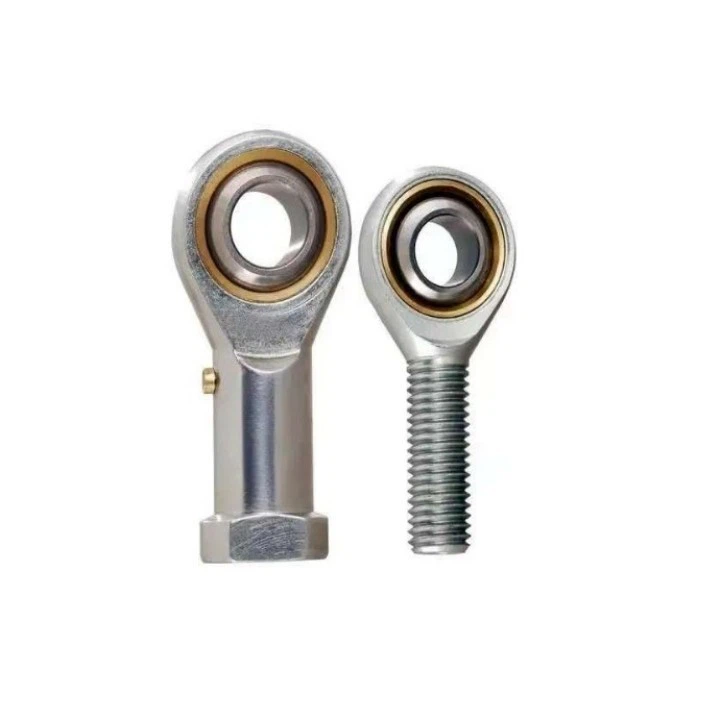

Once you've removed the bearing, take a good look at it. Check for any visible signs of damage, like cracks, chips, or excessive wear. If you notice any serious damage, it might be time to replace the bearing. You can check out our Stainless Steel Heim Joint Rod Ends SI8 or Stainless Steel Rod End Bearings SI5 for high - quality replacement options.
Next, dip the small brush into the cleaning solvent and gently scrub the bearing. Pay special attention to the inner and outer surfaces, as well as the ball and socket area. The brush will help to dislodge any stubborn dirt or debris. Make sure to get into all the nooks and crannies.
After scrubbing, use the lint - free cloth to wipe away the loosened dirt and solvent. You may need to repeat the scrubbing and wiping process a few times until the bearing is clean. If there are still some tough stains or deposits, you can soak the bearing in the cleaning solvent for a short period (but don't leave it in for too long, as it could damage the bearing).
Once the bearing is clean, let it dry completely. You can use compressed air to speed up the drying process, but make sure the air is clean and dry.
After the bearing is dry, it's time to lubricate it. Apply a thin layer of lubricant to the ball and socket area. The lubricant will help to reduce friction and prevent corrosion. Make sure to use a lubricant that is recommended for the type of bearing you have.
Now that the bearing is clean and lubricated, you can reinstall it into the equipment. Make sure to install it correctly and tighten any fasteners to the proper torque.
Here are some additional tips to keep in mind. Always follow the manufacturer's instructions when cleaning and maintaining your bearings. If you're not sure about something, don't hesitate to ask for advice. Also, keep a regular cleaning schedule for your bearings. Depending on the usage and environment, you might need to clean them every few months or even more frequently.
In conclusion, cleaning a female rod end bearing is not a difficult task if you follow the right steps. By keeping your bearings clean and well - maintained, you can ensure that your machinery and equipment run smoothly and efficiently.
If you're in the market for high - quality female rod end bearings, we're here to help. We offer a wide range of bearings to meet your specific needs. Whether you need the Stainless Steel Heim Joint Rod Ends SI8 or Stainless Steel Rod End Bearings SI5, we've got you covered. Feel free to reach out to us to discuss your requirements and start the procurement process.
References:
General knowledge of mechanical engineering and bearing maintenance.


