


Are ceramic ball bearings suitable for aerospace applications?

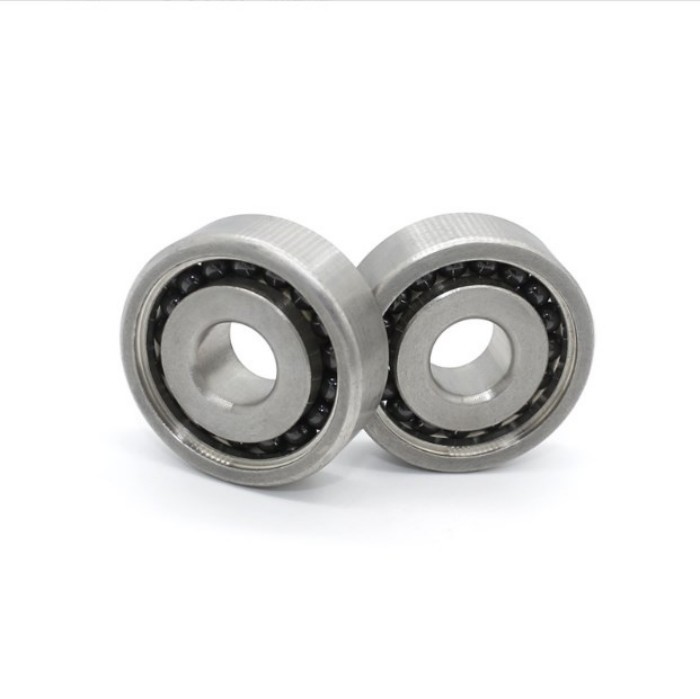
In the highly demanding field of aerospace, the selection of components is crucial to ensure the safety, reliability, and performance of aircraft and spacecraft. One such component that has gained significant attention in recent years is ceramic ball bearings. As a supplier of ceramic ball bearings, I am often asked whether these bearings are suitable for aerospace applications. In this blog post, I will explore the properties of ceramic ball bearings, their advantages and disadvantages in aerospace, and provide some insights into their suitability.
Properties of Ceramic Ball Bearings
Ceramic ball bearings are typically made from materials such as silicon nitride (Si₃N₄) or zirconia (ZrO₂). These materials offer several unique properties that make them attractive for aerospace applications:
- Low density: Ceramics have a lower density compared to steel, which means that ceramic ball bearings are lighter. This is particularly important in aerospace, where weight reduction can lead to significant fuel savings and increased payload capacity.
- High hardness: Ceramics are extremely hard, which makes them resistant to wear and deformation. This results in longer bearing life and reduced maintenance requirements, which are critical factors in aerospace applications where reliability is paramount.
- High temperature resistance: Ceramics can withstand high temperatures without losing their mechanical properties. This is essential in aerospace, where bearings may be exposed to extreme heat generated by engines, friction, or aerodynamic forces.
- Corrosion resistance: Ceramics are inherently corrosion-resistant, which makes them suitable for use in harsh environments, such as those encountered in aerospace applications where exposure to moisture, chemicals, and saltwater is common.
- Low friction: Ceramic ball bearings have a lower coefficient of friction compared to steel bearings, which reduces energy consumption and heat generation. This can lead to improved efficiency and performance in aerospace systems.
Advantages of Ceramic Ball Bearings in Aerospace Applications
The unique properties of ceramic ball bearings offer several advantages in aerospace applications:
- Weight reduction: As mentioned earlier, the low density of ceramics allows for significant weight reduction in aerospace components. This can lead to improved fuel efficiency, increased payload capacity, and extended range of aircraft and spacecraft.
- Increased reliability: The high hardness and wear resistance of ceramics result in longer bearing life and reduced maintenance requirements. This is particularly important in aerospace, where the cost of maintenance and downtime can be extremely high.
- Improved performance: The low friction and high temperature resistance of ceramic ball bearings can lead to improved performance in aerospace systems. For example, in aircraft engines, ceramic bearings can reduce friction and heat generation, which can improve engine efficiency and power output.
- Corrosion resistance: The corrosion resistance of ceramics makes them suitable for use in harsh environments, such as those encountered in aerospace applications where exposure to moisture, chemicals, and saltwater is common. This can help to prevent bearing failure and extend the life of aerospace components.
Disadvantages of Ceramic Ball Bearings in Aerospace Applications
Despite their many advantages, ceramic ball bearings also have some disadvantages that need to be considered in aerospace applications:
- High cost: Ceramic ball bearings are generally more expensive than steel bearings. This is due to the high cost of raw materials, the complex manufacturing processes involved, and the relatively low production volumes.
- Brittleness: Ceramics are brittle materials, which means that they are more prone to cracking and fracture compared to steel. This can be a concern in aerospace applications where bearings may be subjected to high loads, impacts, or vibrations.
- Limited availability: The production of ceramic ball bearings is still relatively limited compared to steel bearings. This can make it difficult to source large quantities of bearings, especially in a timely manner.
- Design challenges: The unique properties of ceramic ball bearings require careful consideration in the design of aerospace components. For example, the low thermal conductivity of ceramics can lead to thermal gradients and stress concentrations, which need to be addressed in the design process.
Applications of Ceramic Ball Bearings in Aerospace
Despite the challenges, ceramic ball bearings are increasingly being used in a variety of aerospace applications, including:
- Aircraft engines: Ceramic ball bearings are used in aircraft engines to reduce friction, heat generation, and wear. They are particularly suitable for use in high-speed and high-temperature applications, such as turbine engines and auxiliary power units.
- Landing gear: Ceramic ball bearings are used in landing gear systems to improve reliability and reduce maintenance requirements. They are able to withstand the high loads and impacts associated with landing and takeoff, and are resistant to corrosion and wear.
- Flight control systems: Ceramic ball bearings are used in flight control systems to provide smooth and precise operation. They are able to withstand the high loads and vibrations associated with flight, and are resistant to wear and corrosion.
- Spacecraft: Ceramic ball bearings are used in spacecraft to reduce weight, improve reliability, and withstand the harsh environment of space. They are able to operate in vacuum conditions and are resistant to radiation and micrometeoroid impacts.
Conclusion
In conclusion, ceramic ball bearings offer several unique properties that make them suitable for aerospace applications. Their low density, high hardness, high temperature resistance, corrosion resistance, and low friction make them attractive for use in a variety of aerospace components, including engines, landing gear, flight control systems, and spacecraft. However, they also have some disadvantages, such as high cost, brittleness, limited availability, and design challenges, which need to be carefully considered in the selection and use of these bearings.
As a supplier of ceramic ball bearings, we are committed to providing high-quality products and technical support to our customers in the aerospace industry. We offer a wide range of Hybrid Ceramic Bearings, Silicon Nitride Bearings, and Zirconia Bearings that are designed to meet the specific requirements of aerospace applications. If you are interested in learning more about our products or discussing your specific needs, please contact us to start a procurement discussion.
References
- "Ceramic Bearings in Aerospace Applications," Journal of Aerospace Engineering.
- "Advances in Ceramic Materials for Bearing Applications," Proceedings of the International Conference on Aerospace Materials.
- "Design Considerations for Ceramic Ball Bearings in Aerospace Systems," AIAA Journal.


