


Are cam roller bearings suitable for heavy - load applications?
Hey there, folks! I'm a supplier of cam roller bearings, and I often get asked this very question: Are cam roller bearings suitable for heavy - load applications? Well, let's dive right in and explore this topic in detail.
First things first, let's understand what cam roller bearings are. In simple terms, cam roller bearings are specialized types of bearings designed to handle radial loads as well as some axial loads. They typically consist of a thick - walled outer ring, cylindrical rollers, and an inner ring. These bearings are commonly used in various machinery where they follow a cam's path, such as in printing presses, packaging machines, and material handling equipment.
When it comes to heavy - load applications, a lot depends on the design and quality of the cam roller bearings. There are different factors that come into play, and we need to assess each one to determine their suitability.
One of the key aspects is the material used in the cam roller bearings. High - quality steel is a popular choice. Steel bearings can withstand a significant amount of load due to their high strength and hardness. For instance, in industrial settings where machines are constantly under heavy stress, steel cam roller bearings are often the go - to option. They can handle the repeated shocks and pressures that come with heavy - duty operations.
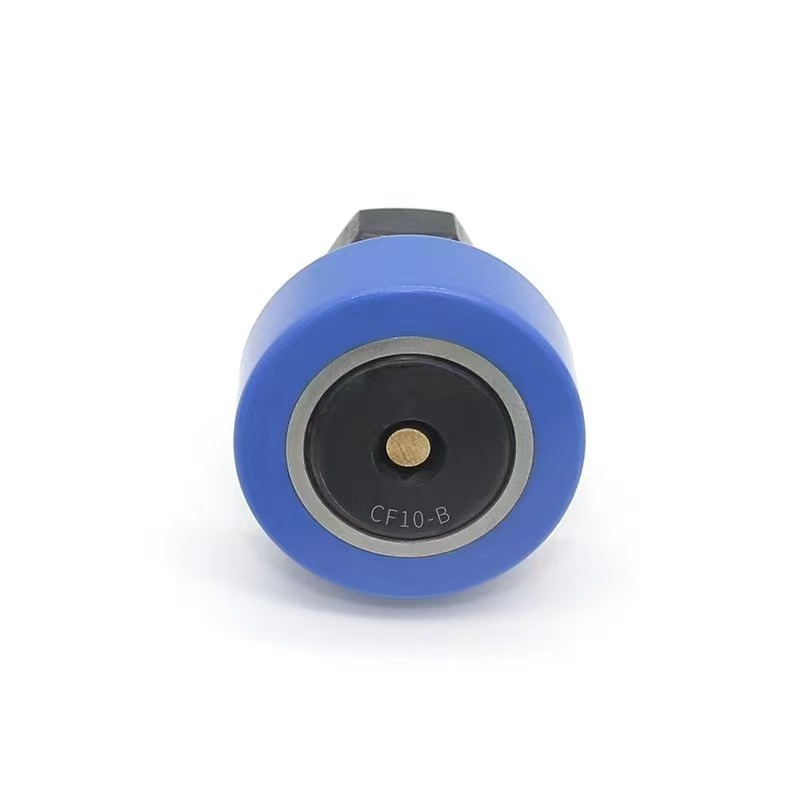
However, we also offer Polyurethane Cam Follower and Plastic Cam Followers. Polyurethane cam followers have some unique properties. They are known for their excellent shock - absorbing capabilities. In applications where there are sudden impacts or vibrations along with heavy loads, the polyurethane can act as a buffer. Plastic cam followers, on the other hand, are lightweight and corrosion - resistant. They might not be the best for extremely high - load applications, but in some situations where the load is moderate and there are concerns about corrosion, they can be a good choice.

Another factor to consider is the internal design of the cam roller bearings. The number and size of the rollers play a crucial role. More rollers generally mean more surface area to distribute the load. This can significantly increase the bearing's load - carrying capacity. For heavy - load applications, bearings with a larger number of appropriately sized rollers are often preferred.
The clearance within the bearing is also important. In heavy - load applications, a certain amount of clearance is needed to accommodate the expansion of the bearing components due to heat generated by the load. If the clearance is too small, the bearing can overheat and fail prematurely.
Let's take a look at some real - world examples. In the automotive industry, cam roller bearings are used in engine valve trains. These bearings need to handle high - speed and heavy - load conditions. The engine's valves open and close at high frequencies, putting a lot of stress on the bearings. High - quality cam roller bearings with proper design and materials can withstand these conditions, ensuring smooth engine operation.
In the construction industry, heavy machinery like cranes and excavators rely on cam roller bearings for various functions. These machines deal with extremely heavy loads on a daily basis. The bearings used in these applications need to be robust and reliable. They are often made of high - grade steel and have a design optimized for heavy - load handling.
Now, let's talk about the advantages of using cam roller bearings in heavy - load applications. One of the main benefits is their ability to handle both radial and axial loads. This versatility makes them suitable for a wide range of machinery. In many cases, using a single cam roller bearing can simplify the design of a machine, as it can replace multiple bearings that would be needed to handle different types of loads separately.
Cam roller bearings also offer good rotational accuracy. In heavy - load applications, maintaining accuracy is crucial. Whether it's in a precision machine tool or a conveyor system, the ability of the bearing to rotate smoothly and accurately ensures the proper functioning of the entire equipment.
However, there are also some challenges when using cam roller bearings in heavy - load applications. One of the main issues is wear and tear. Over time, the high - load conditions can cause the rollers and raceways to wear out. Regular maintenance and lubrication are essential to extend the lifespan of the bearings.
Another challenge is the generation of heat. As mentioned earlier, heavy loads can generate a significant amount of heat. If the heat is not dissipated properly, it can lead to bearing failure. This is why proper cooling and ventilation systems are often needed in heavy - load applications where cam roller bearings are used.
So, are cam roller bearings suitable for heavy - load applications? The answer is yes, but with some considerations. If you choose the right type of cam roller bearing based on the specific load requirements, material, and design, they can perform very well in heavy - load situations.
If you're in the market for cam roller bearings for your heavy - load applications, I encourage you to reach out. We have a wide range of options available, from high - strength steel bearings to specialized polyurethane and plastic cam followers. Our team of experts can help you select the best bearing for your needs. Don't hesitate to contact us to start a conversation about your procurement requirements.
References:
- "Bearing Handbook" by SKF
- Industry reports on cam roller bearing applications in heavy - load machinery


