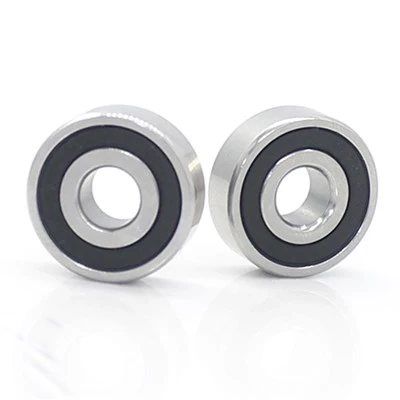
As a trusted ball bearing supplier, I've had the privilege of witnessing firsthand how these unassuming yet crucial components are transforming industries worldwide. The ball bearing, a simple yet ingenious invention, has revolutionized machinery operation by enabling smoother, more efficient, and more reliable movement. In this blog, I will explore the many advantages of ball bearings and explain why they are an essential choice for a wide range of applications.


Reduced Friction
One of the most significant advantages of ball bearings is their ability to reduce friction. Friction occurs when two surfaces move against each other, and it can cause wear and tear, generate heat, and consume energy. Ball bearings minimize friction by using balls to separate the moving parts, allowing them to roll smoothly rather than slide. This rolling motion significantly decreases the contact area between the surfaces, reducing friction and its associated problems.
For example, in industrial machinery, reduced friction means less energy is wasted in overcoming resistance, leading to lower energy consumption and cost savings. In automotive applications, less friction translates to better fuel efficiency, which is not only beneficial for the environment but also for the driver's wallet. The ability of ball bearings to reduce friction is a game-changer, making them a vital component in countless mechanical systems.
High Efficiency
Efficiency is a key consideration in any mechanical system, and ball bearings deliver outstanding performance in this regard. Their low friction design allows machines to operate with maximum efficiency, converting more of the input energy into useful work. This high efficiency is particularly important in industries where large amounts of power are involved, such as manufacturing, transportation, and energy production.
In manufacturing plants, high-efficiency ball bearings enable machines to run at optimal speeds, increasing productivity and reducing production time. In the transportation sector, they contribute to the smooth operation of vehicles, improving overall performance and reducing maintenance requirements. Whether it's a small household appliance or a large industrial machine, ball bearings help to ensure that the system operates as efficiently as possible.
Long Service Life
Ball bearings are designed to withstand heavy loads and harsh operating conditions, which results in a long service life. The use of high-quality materials and advanced manufacturing techniques ensures that the bearings can resist wear, corrosion, and fatigue, even in the most demanding environments. This durability means that ball bearings require less frequent replacement, reducing downtime and maintenance costs.
For instance, in mining and construction equipment, where the machinery is exposed to extreme conditions, ball bearings with a long service life are essential for continuous operation. In the aerospace industry, where reliability is of utmost importance, ball bearings are engineered to meet strict quality and performance standards, ensuring safe and efficient operation over long periods. The long service life of ball bearings makes them a cost-effective solution for many applications.
Precision and Accuracy
Precision and accuracy are critical in many mechanical systems, and ball bearings play a vital role in achieving these qualities. They are manufactured to very tight tolerances, ensuring that the balls and races are perfectly round and smooth. This precision allows for precise control of the movement of the machine parts, reducing vibrations and improving the overall accuracy of the system.
In machine tools, for example, ball bearings enable precise machining operations, resulting in high-quality finished products. In robotics and automation systems, they ensure accurate positioning and movement of the robotic arms, enhancing the performance and reliability of the system. The precision and accuracy provided by ball bearings are essential for industries that require high levels of quality and consistency.
Versatility
Another advantage of ball bearings is their versatility. They are available in a wide range of sizes, designs, and materials, making them suitable for a diverse array of applications. Whether it's a small, lightweight bearing for a consumer electronic device or a large, heavy-duty bearing for an industrial machine, there is a ball bearing to meet the specific needs of the application.
For example, 16000 Series Deep Groove Ball Bearings are known for their high load capacity and versatility, making them suitable for a variety of industrial applications. The Universal Bearing 6000 - 2RS Maintenance Free Ball Bearing offers excellent sealing and reliability, making it ideal for applications where maintenance is difficult or costly. And the 608 - 2RS Skateboard Bearing is designed for high-speed and smooth operation, making it a popular choice for skateboards and other sports equipment.
Low Noise and Vibration
Ball bearings are designed to operate quietly and with minimal vibration. The smooth rolling motion of the balls reduces the noise and vibration generated during operation, creating a more comfortable and efficient working environment. In applications such as household appliances, office equipment, and automotive interiors, low noise and vibration are highly desirable features.
For example, in a refrigerator, ball bearings help to ensure quiet operation, preventing annoying noise from disturbing the household. In a car, they contribute to a smooth and quiet ride, enhancing the comfort of the passengers. The ability of ball bearings to reduce noise and vibration not only improves the user experience but also extends the lifespan of the machinery by reducing stress on the components.
Easy Installation and Maintenance
Ball bearings are relatively easy to install and maintain. They are designed to fit into standard housing and mounting arrangements, making the installation process straightforward. In addition, many ball bearings are pre - lubricated and sealed, which reduces the need for frequent maintenance.
For small businesses or DIY enthusiasts, the ease of installation and maintenance of ball bearings makes them an attractive choice. Even in large industrial settings, the simplicity of these tasks means that less time and resources are spent on maintenance, allowing the machinery to be up and running more quickly.
Cost - Effectiveness
When considering the overall cost of a mechanical system, ball bearings offer excellent value for money. Their long service life, high efficiency, and low maintenance requirements result in significant cost savings over the lifetime of the equipment. Although the initial purchase price of ball bearings may be higher than some other types of bearings, the long - term benefits far outweigh the upfront cost.
In the long run, the reduced energy consumption, lower maintenance costs, and increased productivity associated with ball bearings make them a cost - effective investment for businesses of all sizes. Whether it's a small workshop or a large manufacturing plant, choosing ball bearings can lead to substantial savings and improved profitability.
Contact Us for Your Ball Bearing Needs
If you are in the market for high - quality ball bearings for your application, look no further. As a leading ball bearing supplier, we offer a wide range of products to meet your specific requirements. Our team of experts is on hand to provide you with professional advice and support to ensure that you get the right bearing for the job. Contact us today to discuss your purchase needs and start a fruitful business partnership.
References
- Harris, T. A., & Kotzalas, M. N. (2007). Rolling Bearing Analysis (4th ed.). John Wiley & Sons.
- Jones, A. R., & Harris, T. A. (1991). Rolling-Element Bearing Analysis. John Wiley & Sons.