


As a seasoned cam follower supplier, I've witnessed firsthand the critical role these components play in a wide array of applications. From automotive engines to industrial machinery, cam followers are essential for converting rotary motion into linear motion or vice versa. However, achieving optimal performance requires a tailored approach to design, one that takes into account the specific requirements of each application. In this blog post, I'll share some key considerations and strategies for optimizing the cam follower's design for a specific application.
Understanding the Application Requirements
The first step in optimizing the cam follower's design is to thoroughly understand the application requirements. This includes factors such as the load capacity, speed, temperature, environment, and motion profile. For example, in a high-speed application, the cam follower must be able to withstand the centrifugal forces and provide smooth operation without excessive wear. On the other hand, in a high-temperature environment, the cam follower must be made of materials that can resist heat and maintain their mechanical properties.
To gather this information, it's important to work closely with the customer and conduct a detailed analysis of the application. This may involve reviewing the specifications, conducting on-site inspections, and performing tests or simulations. By understanding the application requirements, you can select the appropriate cam follower design and materials that will meet or exceed the performance expectations.
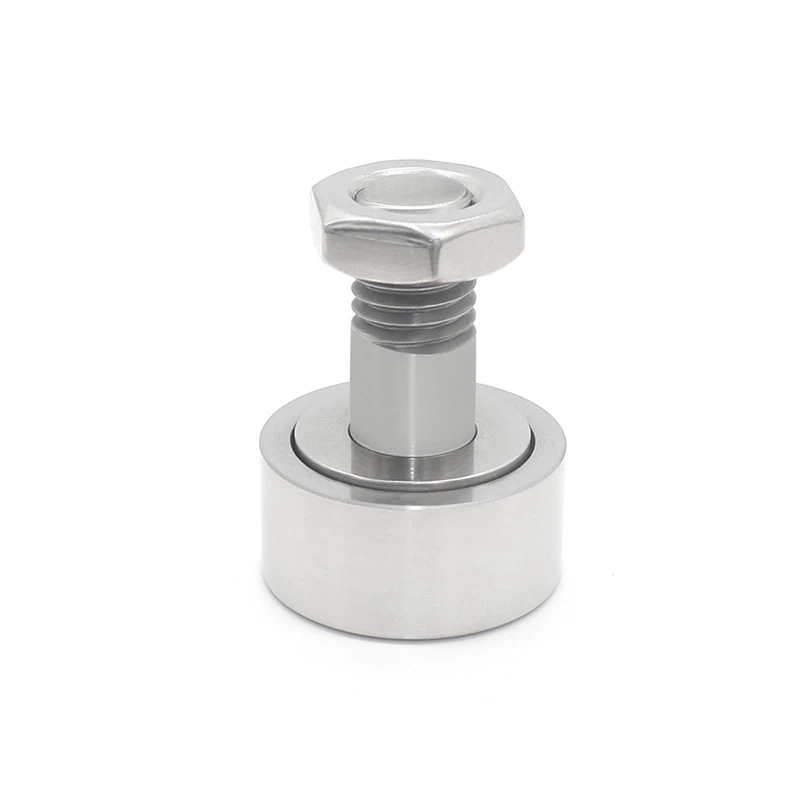

Selecting the Right Cam Follower Type
There are several types of cam followers available, each with its own unique features and advantages. The most common types include stud-style cam followers, yoke-style cam followers, and track rollers. The choice of cam follower type depends on the application requirements, such as the load capacity, speed, and mounting configuration.
- Stud-style cam followers: These are the most commonly used type of cam followers and are characterized by a stud that extends from the inner ring. Stud-style cam followers are suitable for applications where the cam follower needs to be mounted directly to a shaft or other component.
- Yoke-style cam followers: These cam followers feature a yoke that surrounds the outer ring and provides additional support and stability. Yoke-style cam followers are typically used in applications where the cam follower needs to be mounted in a bracket or other structure.
- Track rollers: These are a type of cam follower that are designed to roll along a track or guide rail. Track rollers are commonly used in linear motion applications, such as conveyor systems and automation equipment.
When selecting the right cam follower type, it's important to consider the application requirements, such as the load capacity, speed, and mounting configuration. Additionally, you may want to consider factors such as the material, lubrication, and seal design to ensure optimal performance and durability.
Choosing the Appropriate Materials
The choice of materials for the cam follower is critical to its performance and durability. The materials used must be able to withstand the loads, speeds, and temperatures encountered in the application, as well as resist wear, corrosion, and fatigue. Some of the most common materials used for cam followers include steel, stainless steel, plastic, and polyurethane.
- Steel: Steel is a popular choice for cam followers due to its high strength, hardness, and wear resistance. However, steel is also prone to corrosion, especially in harsh environments. To prevent corrosion, steel cam followers may be coated or plated with a protective layer.
- Stainless steel: Stainless steel is a corrosion-resistant material that is commonly used in applications where the cam follower will be exposed to moisture, chemicals, or other corrosive substances. Stainless steel cam followers are ideal for use in food processing, pharmaceutical, and marine applications.
- Plastic: Plastic cam followers are lightweight, corrosion-resistant, and offer low friction operation. They are commonly used in applications where weight, noise, and cost are important considerations, such as in automotive and consumer products.
- Polyurethane: Polyurethane cam followers offer excellent shock absorption, noise reduction, and wear resistance. They are commonly used in applications where high impact loads or vibration are present, such as in material handling and automation equipment.
When choosing the appropriate materials for the cam follower, it's important to consider the application requirements, such as the load capacity, speed, temperature, and environment. Additionally, you may want to consider factors such as the cost, availability, and ease of machining or assembly.
Optimizing the Design for Lubrication
Lubrication is essential for the smooth operation and longevity of cam followers. Proper lubrication reduces friction, wear, and heat generation, and helps to prevent corrosion and contamination. There are several types of lubricants available for cam followers, including grease, oil, and dry lubricants.
- Grease: Grease is the most commonly used lubricant for cam followers due to its ease of application and long-lasting performance. Grease provides a thick, protective film that helps to reduce friction and wear, and prevents contaminants from entering the bearing.
- Oil: Oil is a more fluid lubricant that provides better cooling and lubrication in high-speed or high-temperature applications. However, oil requires a more complex lubrication system and may be more prone to leakage.
- Dry lubricants: Dry lubricants, such as graphite or molybdenum disulfide, are used in applications where lubrication is not possible or desirable, such as in cleanroom or high-vacuum environments. Dry lubricants provide a thin, low-friction coating that helps to reduce wear and prevent sticking.
When optimizing the design for lubrication, it's important to consider the application requirements, such as the load capacity, speed, temperature, and environment. Additionally, you may want to consider factors such as the lubricant type, viscosity, and frequency of application.
Incorporating Design Features for Improved Performance
In addition to selecting the right cam follower type and materials and optimizing the design for lubrication, there are several other design features that can be incorporated to improve the performance and durability of cam followers. Some of these features include:
- Seals and shields: Seals and shields are used to prevent contaminants from entering the bearing and to retain the lubricant. They are especially important in harsh environments or applications where the cam follower will be exposed to dust, dirt, or moisture.
- Lubrication holes and channels: Lubrication holes and channels are used to provide a path for the lubricant to reach the bearing surfaces. They are especially important in high-speed or high-load applications where the lubricant may need to be replenished more frequently.
- Crowning: Crowning is a process of shaping the outer ring of the cam follower to reduce the stress concentration and improve the load distribution. It is especially important in applications where the cam follower will be subjected to high loads or misalignment.
- Hardening and surface treatments: Hardening and surface treatments are used to improve the wear resistance and hardness of the cam follower. They are especially important in applications where the cam follower will be subjected to high loads or abrasive conditions.
When incorporating design features for improved performance, it's important to consider the application requirements, such as the load capacity, speed, temperature, and environment. Additionally, you may want to consider factors such as the cost, availability, and ease of manufacturing.
Conclusion
Optimizing the cam follower's design for a specific application requires a comprehensive approach that takes into account the application requirements, cam follower type, materials, lubrication, and design features. By understanding the application requirements and working closely with the customer, you can select the appropriate cam follower design and materials that will meet or exceed the performance expectations. Additionally, by incorporating design features for improved performance and durability, you can ensure that the cam follower will provide reliable and efficient operation for years to come.
If you're interested in learning more about our cam follower products or have a specific application that you need help with, please don't hesitate to contact us. Our team of experienced engineers and technical experts is available to provide you with the information and support you need to make the right decision. We look forward to working with you!
References
- Deutschmann, O., & Rettenmayr, M. (2009). Tribology of Cam Follower Systems. Springer.
- Harris, T. A., & Kotzalas, M. N. (2007). Rolling Bearing Analysis. Wiley.
- Radzimovsky, R. (1998). Cam Follower Design and Application Handbook. Industrial Press.


