


As a flange bearing supplier, I've spent a significant amount of time exploring the intricate relationship between clearance and the performance of flange bearings. In this blog, I'll delve into how clearance affects the various aspects of a flange bearing's performance, and why it's crucial for both manufacturers and end - users to understand this relationship.
Understanding Flange Bearings
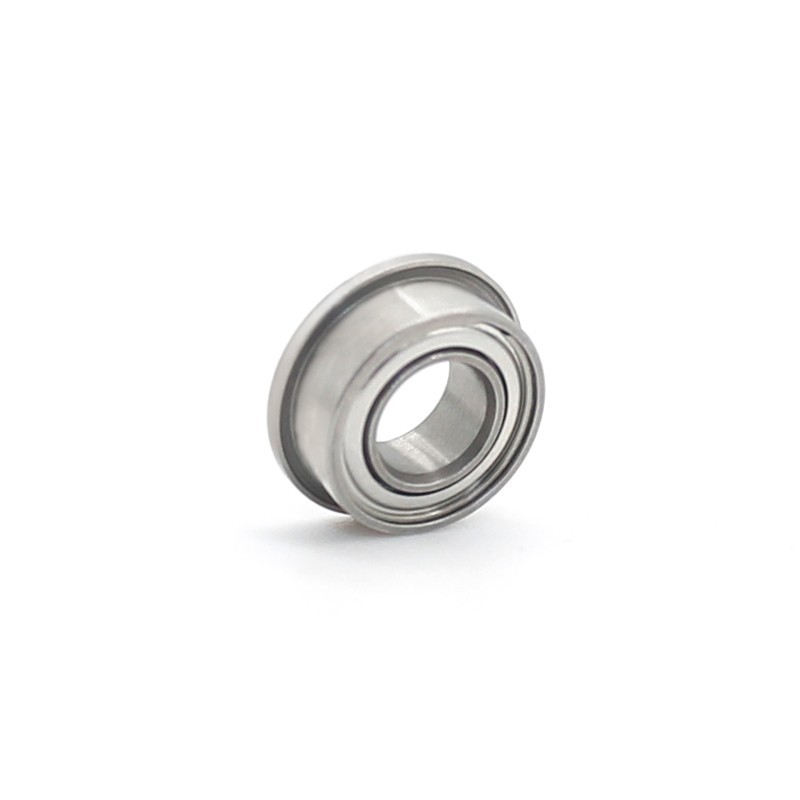
Flange bearings are a type of ball bearing that has a flange on the outer ring. This flange serves multiple purposes, such as providing easy mounting and alignment in various applications. They are widely used in industries like automotive, machinery, and robotics. The design of flange bearings allows them to handle both radial and axial loads, making them versatile components in mechanical systems.
What is Clearance in Flange Bearings?
Clearance in a flange bearing refers to the amount of internal play between the rolling elements (balls) and the raceways of the inner and outer rings. It is typically measured in micrometers or thousandths of an inch. There are two main types of clearance: radial clearance and axial clearance. Radial clearance is the distance between the inner and outer rings in the radial direction, while axial clearance is the movement between the rings in the axial direction.
Impact of Clearance on Load Capacity
The clearance of a flange bearing has a direct impact on its load - carrying capacity. When the clearance is too small, the rolling elements are tightly packed between the raceways. This can lead to increased stress on the balls and raceways, especially under high loads. As a result, the bearing may experience premature wear and fatigue, reducing its overall load - carrying capacity.
On the other hand, if the clearance is too large, the rolling elements have more freedom of movement. This can cause the bearing to experience excessive vibration and noise under load. The load is not evenly distributed among the rolling elements, and some balls may carry a disproportionately high load. This uneven load distribution can also lead to accelerated wear and a decrease in the bearing's load - carrying capacity.
For example, in heavy - duty industrial applications such as Gearbox Bearings, where high loads are common, the proper clearance is essential. A well - chosen clearance ensures that the load is evenly distributed among the rolling elements, maximizing the bearing's load - carrying capacity and extending its service life.
Influence on Rotational Accuracy
Rotational accuracy is another critical aspect of flange bearing performance, especially in applications where precision is required. When the clearance is small, the bearing can provide high rotational accuracy. The tight fit between the rolling elements and the raceways minimizes the amount of radial and axial movement during rotation. This is crucial in applications such as machine tools and precision instruments.
Conversely, a large clearance can lead to poor rotational accuracy. The extra play allows the inner and outer rings to move relative to each other, causing the shaft to deviate from its intended path. This can result in inaccurate machining, reduced product quality, and increased wear on other components of the system.
For instance, in a high - precision robotic arm, the Flange Bearing MF83 with appropriate clearance is used. The small clearance ensures that the arm can move with high precision, enabling accurate positioning and operation.
Effect on Temperature and Lubrication
Clearance also affects the temperature and lubrication of a flange bearing. When the clearance is small, the rolling elements and raceways are in close contact. This can generate more heat due to increased friction. High temperatures can cause the lubricant to degrade more quickly, reducing its effectiveness in reducing friction and wear.
A large clearance, on the other hand, can lead to poor lubrication. The extra space between the rolling elements and the raceways may cause the lubricant to leak out more easily. Additionally, the uneven load distribution associated with large clearance can result in localized areas of high stress, where the lubricant may not be able to provide sufficient protection.
Proper lubrication is essential for the smooth operation of a flange bearing. In applications like the Application Of Micro Bearing MF106ZZ in Electric Nail Polish Machine, maintaining the right clearance is crucial to ensure that the lubricant can effectively reduce friction and keep the bearing temperature within an acceptable range.
Noise and Vibration
Clearance has a significant impact on the noise and vibration levels of a flange bearing. A small clearance generally results in lower noise and vibration. The tight fit between the rolling elements and the raceways reduces the amount of movement and rattling, providing a smoother and quieter operation.
When the clearance is large, the bearing is more likely to produce noise and vibration. The extra play allows the rolling elements to move freely, causing them to collide with the raceways and generate noise. This can be a major issue in applications where quiet operation is required, such as in household appliances or office equipment.
Selecting the Right Clearance
Selecting the appropriate clearance for a flange bearing depends on several factors, including the application, load conditions, operating temperature, and rotational speed. In general, applications that require high precision and low vibration, such as in medical equipment or aerospace, typically require bearings with small clearances.

For applications with high loads and shock, a slightly larger clearance may be necessary to accommodate the additional forces. It's also important to consider the thermal expansion of the bearing components during operation. In high - temperature applications, the clearance should be adjusted to account for the expansion of the inner and outer rings.
Quality Control in Manufacturing
As a flange bearing supplier, quality control is of utmost importance when it comes to managing clearance. During the manufacturing process, strict tolerances are maintained to ensure that the bearings have the desired clearance. Advanced manufacturing techniques and precision measuring instruments are used to achieve accurate clearance values.
We also conduct thorough testing on our bearings to verify their performance. This includes load testing, rotational accuracy testing, and noise and vibration testing. By ensuring that our bearings meet the highest quality standards, we can provide our customers with reliable products that perform well in various applications.
Conclusion
In conclusion, the clearance of a flange bearing has a profound impact on its performance in terms of load capacity, rotational accuracy, temperature, lubrication, noise, and vibration. As a flange bearing supplier, we understand the importance of providing bearings with the right clearance for each application. Whether you're looking for bearings for a high - precision machine or a heavy - duty industrial gearbox, we have the expertise and products to meet your needs.
If you're interested in purchasing flange bearings or have any questions about clearance and bearing performance, we encourage you to contact us for a detailed discussion. Our team of experts is ready to assist you in selecting the best bearings for your specific requirements.
References
- Harris, T. A., & Kotzalas, M. N. (2007). Rolling Bearing Analysis (5th ed.). Wiley.
- Jones, A. R. (1960). Basic Theory of Ball and Roller Bearings. SKF Industries.


