


Hey there! As an automotive bearings supplier, I've seen my fair share of counterfeit products in the market. It's a real headache, not just for us suppliers but also for the end-users, like mechanics and car owners. Counterfeit bearings can cause all sorts of problems, from reduced performance to serious safety risks. So, in this blog, I'm gonna share with you how I identify counterfeit automotive bearings.
Packaging and Labels
One of the first things I look at is the packaging. Genuine automotive bearings usually come in high - quality packaging. The box should be well - made, with clear printing and no signs of rough edges or poor craftsmanship. The labels on the box are also a dead giveaway. They should have all the necessary information, like the bearing model, size, and the manufacturer's logo.
For example, if I'm looking at a Special Bearing 6905 - 2RS For Automotive Steering Systems, the label on the box should be sharp and legible. Counterfeit products often have blurry or misspelled labels. The font might be different from the original, and the colors may not match the official branding. Sometimes, the labels are even peeling off or have a sticky residue, which is a big red flag.
Visual Inspection
Once I've checked the packaging, I move on to the bearing itself. A genuine bearing has a smooth and even surface. The outer ring, inner ring, and rolling elements should be free of any scratches, dents, or rough spots.
The color of the bearing can also tell a lot. Most high - quality automotive bearings have a consistent silver - gray color, which indicates proper heat treatment and material quality. Counterfeit bearings may have a dull or uneven color, or they might look too shiny, which could be a sign of poor - quality plating.
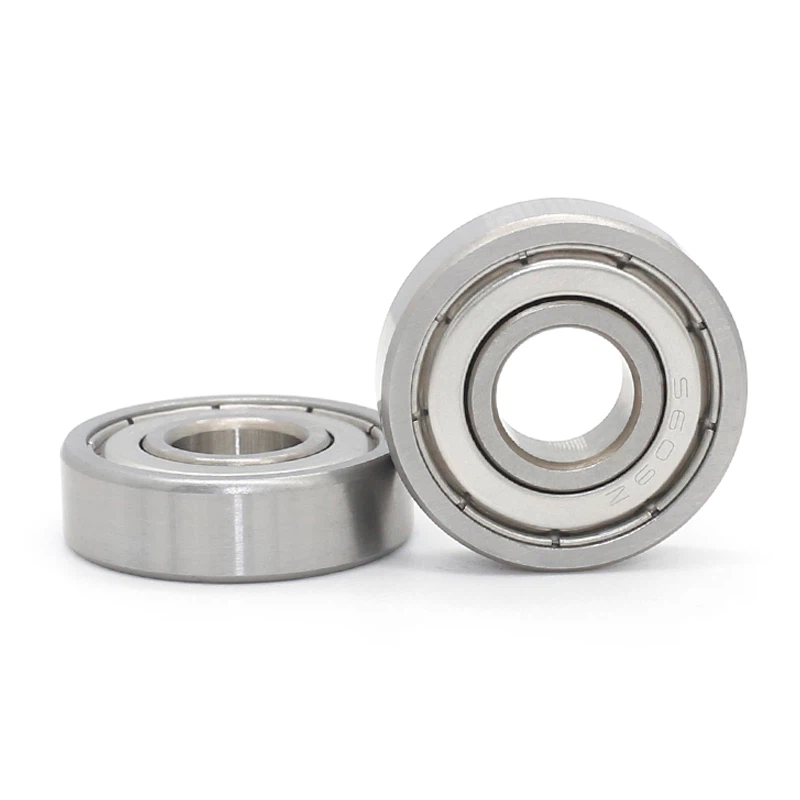
Another thing to look at is the spacing between the rolling elements. In a genuine bearing, the balls or rollers are evenly spaced. If the spacing is irregular, it's likely a counterfeit. Also, the seals on the bearing should be in good condition. They should fit snugly and have a consistent appearance. For instance, in a Car Wiper Motor Special Bearing S607ZZ, the seals play a crucial role in protecting the bearing from dirt and moisture. A counterfeit seal might be loose or have a different texture.

Markings and Engravings
Genuine automotive bearings usually have precise markings and engravings. The model number, size, and the manufacturer's logo are engraved on the bearing itself. These engravings are deep and clear.
Counterfeit bearings may have shallow or poorly - formed engravings. The letters and numbers might be uneven or not in the correct font. Sometimes, the markings are so faint that you can barely see them. This is a major sign that the bearing is not genuine.
Weight and Balance
Weight can be a useful indicator as well. Genuine bearings are made from high - quality materials, and they have a specific weight. If a bearing feels too light or too heavy compared to the genuine product, it could be a counterfeit.
Balance is also important. A well - made bearing should rotate smoothly and evenly. If you spin the bearing and it wobbles or makes a lot of noise, it's likely a fake. For a Automotive Cooling Fan Bearing 609ZZ, smooth rotation is essential for the proper functioning of the cooling fan.
Documentation and Certifications
Genuine automotive bearings usually come with proper documentation, such as a certificate of origin, quality control reports, and installation instructions. These documents are official and have the manufacturer's stamp or signature.
Counterfeit products often lack this documentation. Or, if they do have some papers, they might be fake or forged. So, always ask for the documentation when you're buying automotive bearings.
Price
Last but not least, price can be a clue. If a bearing is priced significantly lower than the market average, it's probably a counterfeit. High - quality automotive bearings require advanced manufacturing processes and good materials, which come at a cost. A too - good - to - be - true price usually means you're getting a fake product.
Why It Matters
Identifying counterfeit automotive bearings is not just about protecting my business as a supplier. It's also about ensuring the safety and performance of vehicles. Counterfeit bearings can fail prematurely, leading to breakdowns on the road. This can be dangerous, especially at high speeds.
For mechanics, using counterfeit bearings can damage their reputation. If a customer's car breaks down because of a faulty bearing, the mechanic will be held responsible. And for car owners, it means unexpected repair costs and potential safety risks.
Conclusion
In conclusion, identifying counterfeit automotive bearings requires a combination of careful inspection and common sense. By looking at the packaging, the bearing itself, the markings, the weight, the documentation, and the price, you can spot a fake bearing.
If you're in the market for automotive bearings, make sure to do your due diligence. And if you have any questions or need help in choosing the right bearings, feel free to reach out. We're here to help you get the best quality products for your vehicles. Let's work together to keep the roads safe and vehicles running smoothly.
References
- Industry standards for automotive bearings
- Manufacturer's guidelines for bearing identification
- Past experiences dealing with counterfeit products in the automotive bearing market


