


Hey there! As a supplier of PEEK pulleys, I've got my fair share of questions about these nifty little components. One that pops up quite often is, "Can PEEK pulleys be machined easily?" Well, let's dive right in and explore this topic.
First off, let's talk a bit about what PEEK is. PEEK, or Polyether Ether Ketone, is a high-performance thermoplastic known for its excellent mechanical properties, chemical resistance, and thermal stability. These qualities make it a top choice for various industries, including aerospace, automotive, and medical, where reliability and durability are key.
When it comes to machining, PEEK has some unique characteristics that both help and pose a bit of a challenge. On the plus side, PEEK has a relatively consistent structure, which means it can be machined to tight tolerances. Unlike some other plastics that might crack or break during machining, PEEK can withstand the forces involved in cutting, drilling, and milling.
One of the reasons PEEK is so machinable is its high melting point. This allows for higher cutting speeds without the risk of the material melting or deforming. You can use standard machining tools, like end mills and drills, but you'll need to make sure they're sharp. Dull tools can cause excessive heat buildup, which might lead to problems like discoloration or damage to the surface finish.
Another advantage is that PEEK doesn't absorb moisture like some other plastics. This means you don't have to worry about the material swelling or warping during machining, which can be a real headache when working with more hygroscopic materials.
However, it's not all smooth sailing. PEEK is a hard material, and this can put a bit more wear and tear on your tools. You'll probably find that you need to replace your cutting tools more frequently compared to machining softer plastics. Also, because of its hardness, PEEK can produce a lot of heat during machining. To manage this, you'll need to use plenty of coolant or lubricant to keep the temperature down and prevent any thermal damage.
Now, let's talk about the specific machining processes for PEEK pulleys. Turning is one of the most common methods. When turning a PEEK pulley, you can achieve a nice, smooth surface finish. You'll want to start with a slow feed rate and gradually increase it as you get a feel for the material. This helps prevent any sudden forces that could cause the pulley to crack or chip.
Milling is another option. It's great for creating more complex shapes and features on the pulley. You can use different types of milling cutters, depending on the design you're going for. Just remember to keep an eye on the cutting speed and feed rate to avoid any issues.
Drilling holes in a PEEK pulley is also possible. You'll need a high-quality drill bit and a steady hand. Make sure to use a peck drilling technique, where you periodically retract the drill bit to clear the chips. This helps prevent clogging and keeps the hole clean.

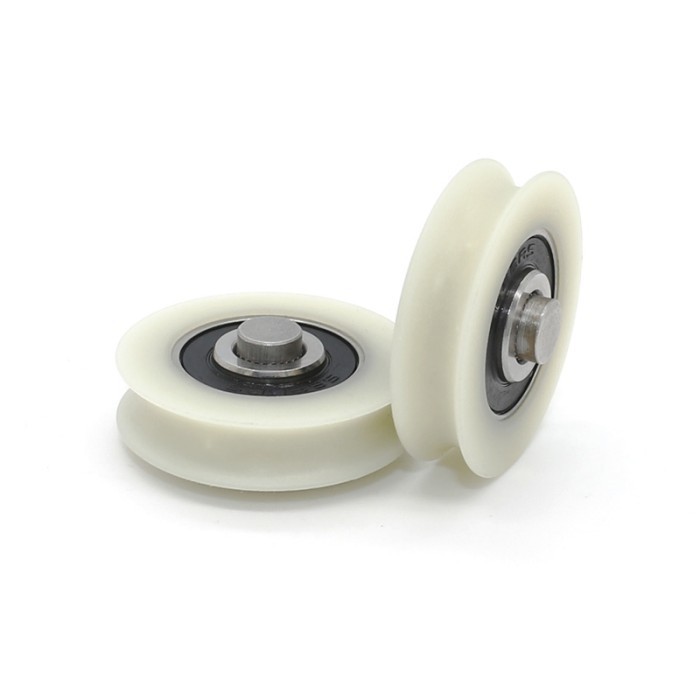
As a PEEK pulley supplier, I've seen the end results of successful machining. The finished pulleys are not only strong and reliable but also have a great aesthetic appeal. They can be used in a wide range of applications, from conveyor systems to precision machinery.
If you're in the market for some high-quality PEEK pulleys, or you're interested in our other products, we've got you covered. Check out some of our related products:
- Non-standard U-shaped Rubber-coated Pulley Bearing S608ZZ
- S626RS Bearing Pulley
- U Shaped S626RS Rubber Coated Beads Pulley
- Sliding Door U Groove Rubber Pulley
- S686ZZ Bearing Nylon Coated Pulley Wear Resistant U Groove Guide Wheel For Automation Equipment
So, can PEEK pulleys be machined easily? Well, it's not the simplest task out there, but with the right tools, techniques, and a bit of experience, it's definitely doable. And the end result is a high-quality pulley that can meet the demands of even the most challenging applications.
If you're interested in learning more about PEEK pulleys or are thinking about a purchase, don't hesitate to reach out. We'd love to discuss your specific needs and how we can help. Whether you're looking for a standard pulley or a custom solution, we're here to support you every step of the way.
References
- "High-Performance Polymers: A Guide to PEEK and Its Applications" by Material Science Press
- "Machining of Engineering Plastics" published by Industrial Machinery Reviews


